
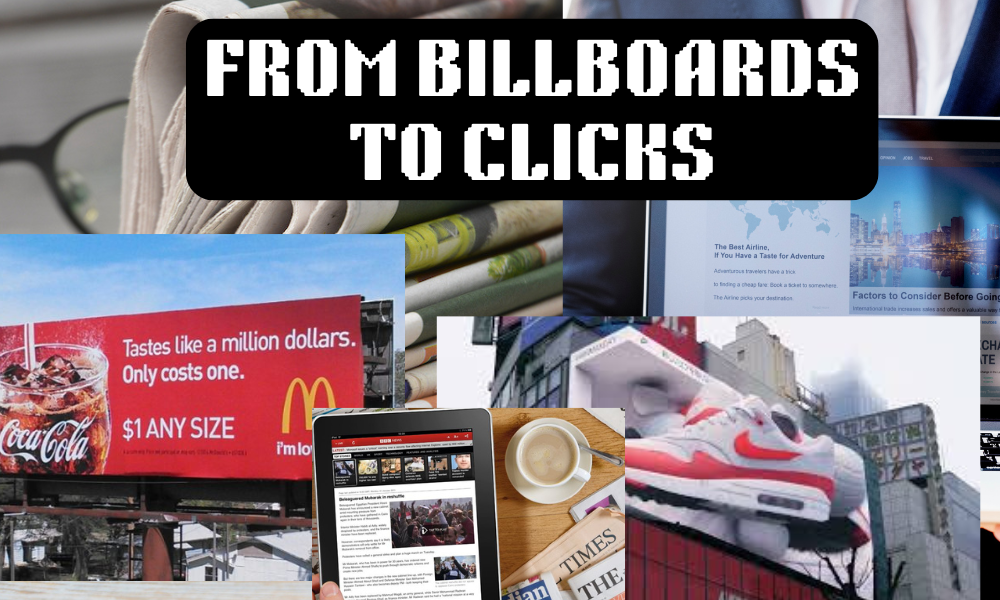
The marketing landscape has experienced an undeniable transformation over the past few decades. Traditional marketing methods, like billboards, print ads, and TV commercials, were once the backbone of brand promotion. Today, these methods are being rapidly overshadowed by the rise of digital marketing. The shift began in the late 1990s and early 2000s and has since moved at lightning speed, fundamentally changing the way businesses reach their audiences.
The Beginning of the Shift
The shift from traditional to digital marketing truly took off in the late 1990s with the rise of the internet. As more households gained internet access, businesses saw an opportunity to reach their customers online. Email marketing was one of the first forms of online marketing to gain popularity, allowing businesses to communicate directly with consumers in a more personalised way.
By the early 2000s, search engines like Google had become widely used, changing the way people searched for information. This gave rise to search engine optimisation (SEO), a practice where businesses tailored their online content to rank higher in search results. Suddenly, being visible online became crucial, and the focus of marketing began to shift.
The Rapid Rise of Social Media
As social media platforms like Facebook, Twitter, and Instagram emerged in the mid-2000s, the shift from traditional marketing to online marketing accelerated. Social media offered businesses a direct line of communication to their audience and allowed for highly targeted advertising. Unlike traditional ads, which targeted large, often broad audiences, online marketing could pinpoint individuals based on specific interests, behaviours, and demographics.
Brands that once spent millions on billboard ads and TV commercials now found value in creating engaging online content. Social media also introduced the concept of influencer marketing, where companies partnered with online personalities to promote their products. This direct and personal approach appealed to younger generations and quickly became a staple of digital marketing strategies.
The rise of social media from the 2000s

The Decline of Traditional Advertising
With the rise of online marketing, traditional advertising began to lose its dominance. Print media, once the primary advertising platform, saw a sharp decline in readership as consumers turned to online news sources. TV commercials, which had long been the gold standard of advertising, faced a similar fate as streaming services like Netflix became more popular, allowing viewers to skip ads altogether.
The speed at which digital marketing grew was astonishing. By the 2010s, many businesses had already shifted the majority of their marketing budgets from traditional channels to digital platforms. Pay-per-click (PPC) advertising, content marketing, and email marketing became the new focus, allowing businesses to reach their audiences faster, more affordably, and with measurable results.
Why Digital Marketing Took Over
One of the main reasons for the rapid rise of digital marketing is its cost-effectiveness. Compared to traditional advertising, digital marketing offers a better return on investment (ROI). With online platforms, businesses can monitor how well their campaigns are performing in real-time and adjust them accordingly. Whether it’s tweaking an ad to improve click-through rates or refining a landing page to boost conversions, digital marketing allows for flexibility that traditional advertising simply cannot match.
Moreover, the rise of smartphones and mobile browsing further fuelled the dominance of digital marketing. As consumers increasingly accessed the internet through their phones, businesses adapted by creating mobile-friendly websites, apps, and ads. This shift has made it easier than ever for brands to stay connected with their customers 24/7, something traditional marketing could never achieve.
Explore Three66media digital marketing solutions
Where We Are Now
Today, digital marketing is an essential part of almost every business strategy. Whether it’s through SEO, social media, email campaigns, or content marketing, companies are leveraging the power of digital platforms to reach their customers more effectively.
Although traditional advertising still has a place in some industries, its influence has greatly diminished. Billboards, print ads, and TV commercials now play more of a supporting role in broader marketing strategies, with digital campaigns often leading the way. Businesses that once relied heavily on traditional methods have had to adapt to stay relevant in this new, fast-paced marketing world.
Conclusion
The shift from billboards to clicks has redefined how businesses approach advertising. Starting in the late 1990s and accelerating through the 2000s, the digital revolution has completely transformed marketing. With its flexibility, cost-effectiveness, and ability to target specific audiences, digital marketing has not only replaced many traditional methods but has also set the stage for the future of brand promotion.
As businesses continue to evolve, it’s clear that digital marketing will remain a dominant force. The ability to connect with customers in a personal and measurable way is simply too powerful to ignore. So, while billboards and print ads may never disappear entirely, the world of clicks is here to stay.