
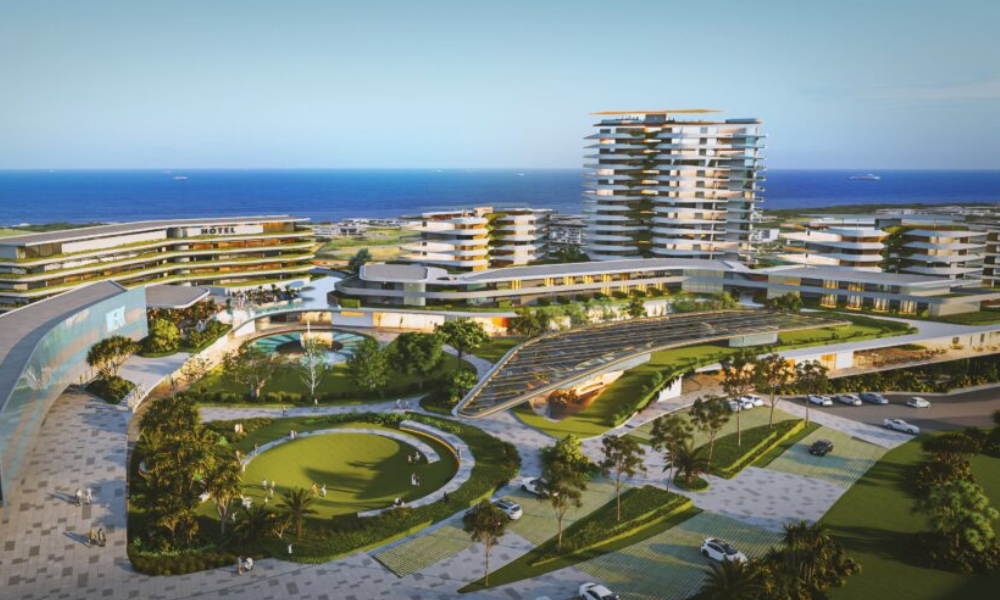
The South African property development landscape is shifting quite dramatically. From Johannesburg’s Waterfall City to Cape Town’s Harbour Arch, mixed-use precincts are redefining urban living. However, KwaZulu-Natal is emerging as a frontrunner, capturing attention with its unique blend of lifestyle appeal and strategic property development that offers lessons for the entire country.
Mixed-use developments answer a fundamental question many South Africans face: how can we reduce commute times, enhance security, and improve quality of life while making sound investment decisions? These property developments seamlessly blend residential units, office spaces, retail outlets, and recreational facilities into cohesive precincts.
KZN’s Strategic Momentum
What makes KZN particularly attractive for property development goes beyond its year-round warm climate and stunning coastline. The province has experienced significant investment momentum. Residential building plans increased by 32% in 2024, with over R6.68 billion in approved developments, positioning KZN among the top three provinces nationally for building activity.
Since 2011, approximately 193 families per month have relocated to key North Coast areas including Ballito, Salt Rock, and KwaDukuza. This sustained growth, with 67% of residents under 55 choosing to remain in KZN, demonstrates the province’s ability to retain and attract residents – crucial for sustainable property development.
The scale of incoming investment signals serious long-term confidence. The R2 billion Club Med beach resort in Tinley Manor will create 2,300 jobs and attract over 400 international visitors weekly when it opens this year, 2026. Meanwhile, the R20 billion Sibaya precinct expansion represents one of the largest mixed-use property developments on the continent. These are part of a broader R75.8 billion investment pipeline, creating a multiplier effect that drives complementary property development while improving infrastructure.
The Semigration Advantage
South Africa’s semigration trend increasingly favours KZN. The province received 1,300 semigrants recently, with 800 from Gauteng and 200 from the Western Cape. Property buyers from Johannesburg and Cape Town are discovering that KZN offers comparable lifestyle benefits at more accessible price points.
Umhlanga exemplifies this transformation. With average household incomes between R124,000 and R156,000 monthly and 47% of households classified as wealthy, the market supports sophisticated property development. Yet a luxury beachfront home in uMhlanga that sells for R17 million would likely command over R100 million in Cape Town’s Clifton, illustrating the value gap attracting buyers from other provinces.
Learn More about the Coastal Estate Boom
What Makes Property Development Succeed
Successful mixed-use property development requires more than combining different building types. The most effective precincts share key characteristics: strategic location with excellent connectivity, comprehensive security, thoughtful urban design that encourages walkability, and genuine community.
KZN’s developments excel in lifestyle integration. The Sibaya Coastal Precinct, with over R1.72 billion in home sales, exemplifies this approach. With 60% of the 1,000-hectare precinct preserved as green corridors, residents enjoy both urban convenience and environmental connection – a development philosophy that recognizes people want nature alongside amenities.
Similarly, Ballito and Salt Rock developments prioritize estate living, with over 50% of property stock in gated communities providing enhanced security and maintained infrastructure. Organizations like the Ballito Urban Improvement Precinct and Umhlanga Urban Improvement Precinct demonstrate how public-private partnerships deliver supplementary security, cleaning, and maintenance services that create environments where property development flourishes.
Infrastructure investment further supports this growth. The R110 million Seaton Interchange, completing in March 2026, will ease congestion and unlock new commercial zones, demonstrating how strategic infrastructure enables property development at scale.
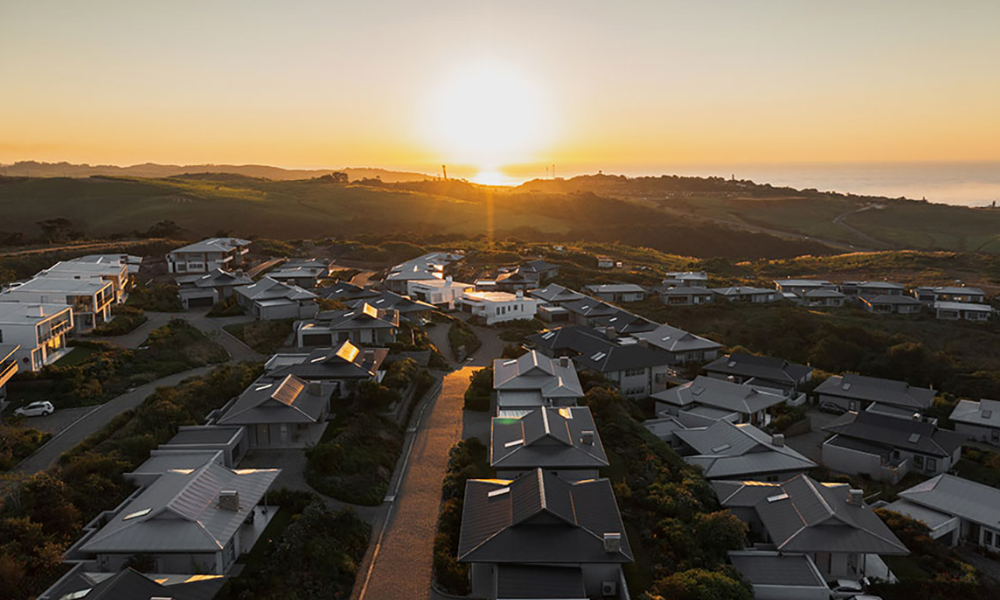
Renishaw Coastal Precinct in the South Coast of KwaZulu-Natal
Investment Potential
For investors and homebuyers, mixed-use property development in KZN presents compelling opportunities, this is including the South Coast, the west of Durban (Hillcrest, Shongweni, and further into the North Coast – Tinley Manor and beyond. Capital appreciation data shows consistent growth, with some areas achieving 11% increases in median prices. Sectional title units in estates command premium prices, often 19% to 64% higher than comparable units outside estates, reflecting the added value of integrated amenities and security.
Recent buyer activity shows strong representation from the 36-49 age bracket, comprising mature families and professionals seeking quality of life improvements. This demographic provides both purchasing power and long-term commitment, offering market stability.
Looking Ahead
As South Africa’s property development sector evolves, the live-work-play concept will likely become increasingly central to urban planning nationwide. KZN’s success offers valuable lessons: authentic lifestyle integration matters more than architectural novelty, security and convenience are non-negotiable, and sustainable property development requires long-term vision.
For those considering property investment or relocation, KZN’s mixed-use developments represent more than housing – they offer a reimagined way of living that addresses contemporary South African concerns while capitalizing on the province’s natural advantages. The transformation isn’t merely about buildings, it’s about creating communities where people genuinely want to spend their time, raise families, and build careers. That’s the promise of well-executed mixed-use property development, and KZN is delivering on it with increasing confidence.
See Our Property Marketing Solutions