
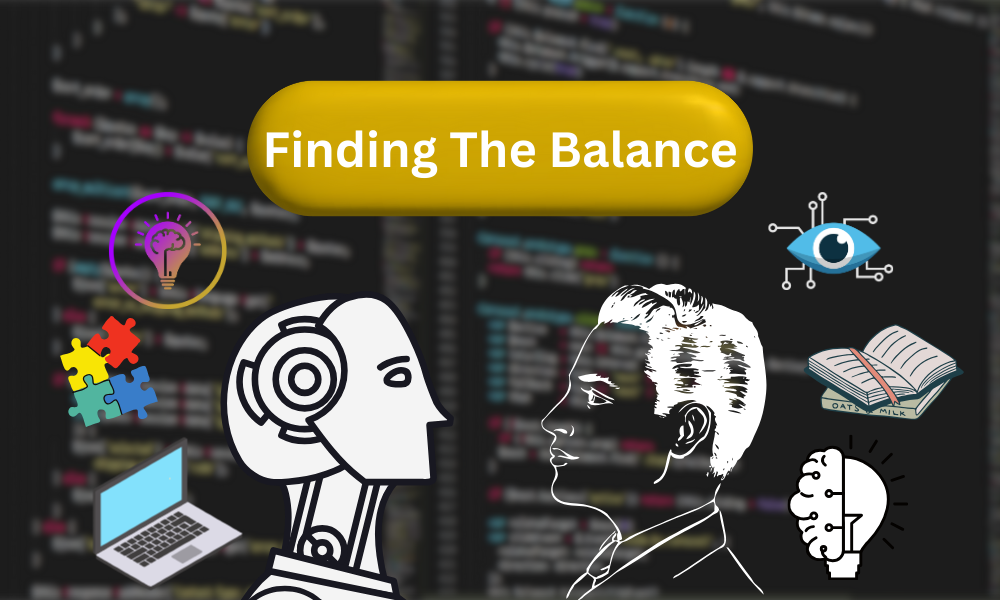
In today’s fast-paced digital landscape, businesses are constantly seeking ways to stay ahead of the competition. The rise of artificial intelligence (AI) in marketing has been nothing short of revolutionary, offering tools that streamline processes, enhance productivity, and provide valuable insights. However, while AI offers significant advantages, it is crucial to recognise that human creativity remains at the heart of successful marketing strategies.
The Role of AI Tools in Modern Marketing
AI tools have transformed the marketing industry by automating repetitive tasks, analysing vast amounts of data, and optimising campaigns. These tools have become indispensable in digital marketing, offering a range of benefits that make the job easier for marketers.
For instance, AI-powered platforms like HubSpot and Mailchimp can automate email marketing campaigns, ensuring that the right message reaches the right audience at the right time. Similarly, tools such as Google Analytics and SEMrush use AI to analyse website traffic, identify trends, and suggest improvements, helping marketers make data-driven decisions. Social media management tools like Hootsuite and Buffer also utilise AI to schedule posts, track engagement, and even suggest the best times to post, making social media marketing more efficient.
Moreover, AI is making strides in content creation. Tools like Copy.ai and Jasper can generate blog posts, social media captions, and even product descriptions with just a few clicks. These tools save time and resources, allowing marketers to focus on other aspects of their campaigns.
The Limitations of AI: Where Human Creativity Shines
Despite these impressive capabilities, AI tools are not without their limitations. While they excel at handling data and automating tasks, they often lack the nuanced understanding of human emotions, culture, and context that is essential for truly effective marketing.
Marketing is not just about delivering content; it’s about telling a story, building relationships, and creating an emotional connection with the audience. This is where human creativity comes into play. A machine may be able to generate content, but it takes a human to craft a compelling narrative that resonates with people on a deeper level.
Consider the process of developing a brand identity. While AI can analyse market trends and consumer behaviour to suggest branding strategies, it cannot replicate the creativity and intuition that humans bring to the table. A brand’s voice, tone, and personality are shaped by human experiences and insights, which cannot be fully captured by algorithms.
Furthermore, human creativity is essential in adapting marketing strategies to different cultural contexts. AI may struggle to understand the subtleties of local customs, traditions, and language that are crucial for effective communication. For example, a marketing campaign that works well in one country might not translate successfully in another, and it takes a human touch to make those necessary adjustments.
Read more of the pros & cons of AI in marketing

The Human Touch in Customer Engagement
Another area where human creativity outshines AI is in customer engagement. AI can analyse customer data and even predict behaviour, but it cannot build relationships in the way humans can. Successful marketing is not just about reaching people; it’s about understanding them, listening to their needs, and responding with empathy.
Personalised customer interactions, whether through email, social media, or face-to-face communication, require a level of emotional intelligence that AI simply cannot replicate. Humans have the ability to interpret tone, read between the lines, and adjust their approach based on the situation. This human touch is crucial for building trust and loyalty, which are the cornerstones of long-term customer relationships.
Finding the Right Balance
So, how can businesses strike the right balance between leveraging AI efficiency and harnessing human creativity? The key lies in using AI as a tool to enhance, rather than replace, human efforts. AI can take care of the repetitive, data-driven aspects of marketing, freeing up time for marketers to focus on the creative side of things.
For example, AI can analyse customer data to identify trends and preferences, which marketers can then use to inform their creative decisions. AI can also handle the execution of campaigns, allowing marketers to concentrate on developing the ideas that will make those campaigns successful.
Ultimately, the most effective marketing strategies are those that combine the best of both worlds: the speed and efficiency of AI with the creativity and empathy of human beings.
Discover digital marketing leveraging both human insight and Artificial Intelligence
Conclusion
In the ever-evolving world of digital marketing, AI tools have undoubtedly made the job easier, offering efficiency and insights that were previously unimaginable. However, it is essential to remember that marketing is, at its core, a human endeavour. While AI can provide valuable support, it is human creativity that drives the results that matter most to customers. By finding the right balance between AI efficiency and human ingenuity, businesses can create marketing strategies that truly resonate with their audiences and stand out in a crowded marketplace.